
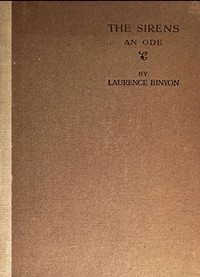
The sirens : An ode by Laurence Binyon
Let's set the scene. You know the myth: Odysseus, tied to his ship's mast, sails past the Sirens' island while his crew, ears plugged with wax, rows like mad. It's a story about resisting temptation. But Binyon flips the script. His poem isn't about Odysseus at all. It's told from the perspective of the Sirens themselves. They're not shrieking harpies; they're almost mournful, eternal beings who have seen everything and sing of a knowledge so profound it's fatal. The 'plot,' such as it is, is their direct address—to the reader, to the world. They describe their endless vigil, the bones of sailors piling up on their shore, and the strange, sad power of their song that promises a truth beyond life.
Why You Should Read It
This is where Binyon gets you. He makes the Sirens sympathetic. Their song isn't evil; it's just too much. It's the answer to every big question, the glimpse of ultimate beauty. Who wouldn't be drawn to that? The poem asks us: what are we willing to wreck in our own lives to hear that kind of truth? It’s about the cost of pure experience and art itself. Is the greatest beauty always destructive? Binyon's language is lush and rhythmic—you can almost hear the melody—but it's never flowery. It has a stark, clean power that makes these ancient figures feel immediate and strangely sad.
Final Verdict
This is a perfect pick for anyone who loves myth retellings that make you see the old stories in a new light. If you enjoyed Madeline Miller's Circe for its fresh perspective, you'll appreciate Binyon's take here. It's also great for poetry newcomers because it's focused and driven by a single, powerful idea. You can read it in one sitting, but you'll think about it for much longer. Just be warned: it might make you a little wary of songs that sound too good to be true.
This work has been identified as being free of known copyright restrictions. It is now common property for all to enjoy.
Paul Gonzalez
9 months agoI've been looking for a reliable source on this topic, and the logic behind each conclusion is easy to follow and verify. A solid investment for anyone's personal development.
Barbara Thompson
1 year agoIt’s refreshing to see such a high standard of digital publishing.
Christopher Young
2 years agoIf you enjoy this genre, the narrative structure is incredibly compelling. Truly inspiring.
Sandra Thompson
2 years agoBased on the summary, I decided to read it and the depth of research presented here is truly commendable. A true masterpiece.








Christopher Anderson
11 months agoAs a professional in this niche, the wealth of information provided exceeds the average market standard. It’s a comprehensive resource that doesn't feel bloated.