
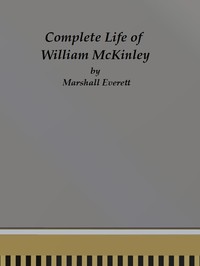
Complete Life of William McKinley and Story of His Assassination by Everett
Everett's book is split into two clear parts. The first half is a brisk biography of William McKinley, from his Civil War service to his rise in Ohio politics and his presidency during the Spanish-American War. It paints a portrait of a widely admired, steady leader known for his character.
Then, the book pivots. The second half is a minute-by-minute account of September 1901. It details the Pan-American Exposition in Buffalo, the moment anarchist Leon Czolgosz shot the president, and the agonizing eight-day wait for a recovery that never came. The narrative lingers on the medical efforts, the public bulletins, and the national outpouring of support. It ends with McKinley's death, Czolgosz's quick trial and execution, and the nation's transition to Theodore Roosevelt.
Why You Should Read It
This isn't a balanced, modern history. That's what makes it fascinating. You're getting the story with all the emotion of the moment still attached. The writing is partisan—McKinley is a saint, Czolgosz is a monster—and that bias is a historical artifact itself. Reading it, you understand not just what happened, but how it felt to people at the time. The detailed reporting on the public's reaction, from newspaper headlines to crowds gathering outside the telegraph office, is gripping. It turns a textbook event into a shared human experience.
Final Verdict
This is a must-read for anyone interested in the Gilded Age or the presidency, but with a specific caveat: it's perfect for readers who want primary source atmosphere. Think of it as the documentary footage from a national tragedy. It's less for someone seeking a critical analysis of McKinley's policies, and more for someone who wants to stand in the shoes of an American in 1901, feeling the ground shift under their feet. Pair it with a more recent biography for the full picture, but read this one first to feel the shockwaves.
Legal analysis indicates this work is in the public domain. Enjoy reading and sharing without restrictions.
Susan Hernandez
6 months agoThe research depth is palpable from the very first chapter.
James Thompson
7 months agoThis work demonstrates a clear mastery of contemporary theories.
Jennifer White
10 months agoThe analytical framework presented is both innovative and robust.
John Taylor
7 months agoThis digital copy caught my eye due to its reputation, the insights into future trends are particularly thought-provoking. It cleared up a lot of the confusion I had previously.




Matthew Jones
1 month agoAs a long-time follower of this subject matter, the language used is precise without being overly academic or confusing. A rare gem in a sea of mediocre content.