
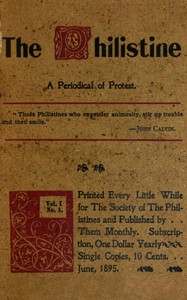
The Philistine : a periodical of protest (Vol. I, No. 1, June 1895) by Various
So, what exactly is this thing? 'The Philistine: A Periodical of Protest' is not a novel. It's the debut issue of a magazine published in 1895 by a man named Elbert Hubbard and his friends. Think of it as a proto-blog or a very opinionated zine. There's no single plot, but a unifying mission: to champion plain thinking and mock artistic and intellectual pretension wherever they found it.
The Story
There isn't a traditional story here. Instead, you get a mix of formats. There are short, punchy essays arguing that true genius is often simple and direct. There are satirical poems taking aim at long-winded poets and obscure painters. There are even little cartoons and aphorisms scattered throughout. The 'characters' are the voices of the writers themselves—witty, skeptical, and firmly on the side of the common reader. The whole issue builds a case against taking art too seriously if it loses its connection to real human experience.
Why You Should Read It
I picked this up expecting a historical curiosity, but it hooked me because it's so relatable. The targets might be 19th-century critics, but the feeling is timeless. Haven't we all encountered a movie, book, or painting that everyone says is brilliant, but just leaves us cold? 'The Philistine' gives you permission to trust that reaction. It's refreshing to see this debate played out with such humor and nerve. The writing is sharp and clear, deliberately avoiding the very flowery language it criticizes. It feels like a breath of fresh air.
Final Verdict
This is a perfect little read for anyone interested in the history of pop culture vs. high culture, for fans of satire, or for people who just enjoy a good, smart argument. It's not long, but it's packed with personality. If you like the idea of hearing the sarcastic, ground-level take on the 'Gilded Age' of art, you'll get a kick out of this. It's a reminder that the fight between what's 'popular' and what's 'prestigious' is nothing new, and that sometimes, the cranks have a point.
The copyright for this book has expired, making it public property. Knowledge should be free and accessible.
William Moore
2 months agoI appreciate how this edition approaches the core problem, the author clearly has a deep mastery of the subject matter. A refreshing and intellectually stimulating read.
Sandra Hill
1 year agoHonestly, the atmosphere created is totally immersive. Exceeded all my expectations.
Christopher Williams
9 months agoThis work demonstrates a clear mastery of contemporary theories.