
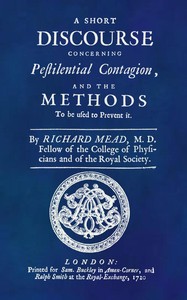
A Short Discourse Concerning Pestilential Contagion, and the Methods to Be Used…
This isn't a novel with characters and a plot. It's an 18th-century medical pamphlet, a direct response to a deadly plague outbreak in Marseille. Richard Mead, a famous English doctor, was asked by the government to write down everything known about how plagues spread and how to stop them. The 'story' is the argument he builds.
The Story
Mead lays out his case step by step. He starts by dismissing old ideas, like plagues being a divine curse or caused by bad weather alone. He then presents his main theory: that a specific, poisonous substance—a 'contagion'—travels from sick people to healthy ones. He argues it can float in the air, cling to goods like fabrics, and be carried over long distances. The rest of the book is his battle plan. He details strict quarantine rules for ships and their cargo. He recommends isolating the sick, cleaning the streets, and even controlling how corpses are buried. He's basically drafting an early public health manual, trying to use observation and reason to protect a whole city.
Why You Should Read It
Reading this today is a wild experience. You'll constantly catch yourself thinking, "Wow, they were on to something," followed immediately by, "Oh, they had that completely wrong." Mead gets so close to the idea of germs, yet he's still trapped in the world of 'poisonous airs.' What's most compelling is his shift in thinking. He moves the fight against plague from churches and prayers to ports and procedures. You see the birth of the idea that society has a responsibility to act collectively against disease. It’s a powerful look at the messy, uncertain beginnings of modern medicine.
Final Verdict
This is a niche but gripping read for a specific audience. It's perfect for history buffs, especially those interested in medicine or the Enlightenment era. If you loved books like "The Ghost Map" or are fascinated by how societies deal with pandemics, this primary source is essential. It's also great for anyone in public health who wants a humbling look at their field's origins. Fair warning: the language is old-fashioned and clinical. It's not a breezy afternoon read. But if you're curious about the roots of our modern world, this short discourse offers a profound glimpse into a moment when human reason first squared up against one of our oldest enemies.
This digital edition is based on a public domain text. Use this text in your own projects freely.
Michael Martin
4 months agoThe layout of the digital version made it easy to start immediately, the way it handles controversial points with balance is quite professional. A trustworthy resource that I'll keep in my digital library.
Richard Perez
11 months agoThis book was worth my time since the storytelling feels authentic and emotionally grounded. I couldn't put it down.
Emma Williams
1 year agoPerfect.
Susan Martinez
1 year agoTo be perfectly clear, the character development leaves a lasting impact. One of the best books I've read this year.






Charles Jones
9 months agoThis digital copy caught my eye due to its reputation, the emphasis on ethics and sustainability within the topic is commendable. The insights gained here are worth every minute of reading.